


GIS Services
Metricon core geospatial services includes technology driven GIS consultancy, geospatial innovations, spatial analysis, Machine Learning and AI tools for automated geospatial data processing workflows, geospatial data solutions, remote sensed imagery processing tools and geospatial technology implementation for organisation, backstopping and support.
We design and develop data driven geospatial tools, visualizations and data rendering and analytics workflows that places geographically powered decisions at your disposal for business decisions.
Our range of services cover all phases of spatial data development from inception, field data gathering, database system development, mapping, spatial analysis , map production to integrated web, mobile and desktop data visualisations .We have thorough understanding of GIS mapping projects lifecycle ; project planning, integrated spatial data handling, spatial analysis and modelling
Our technical geospatial services enables clients understand GIS technology and helps unpack existing potential in any organisation data management workflows.
We support organisation create and integrate existing use cases through geospatially enabling your data handling and fuse GIS tools into your internal business processes
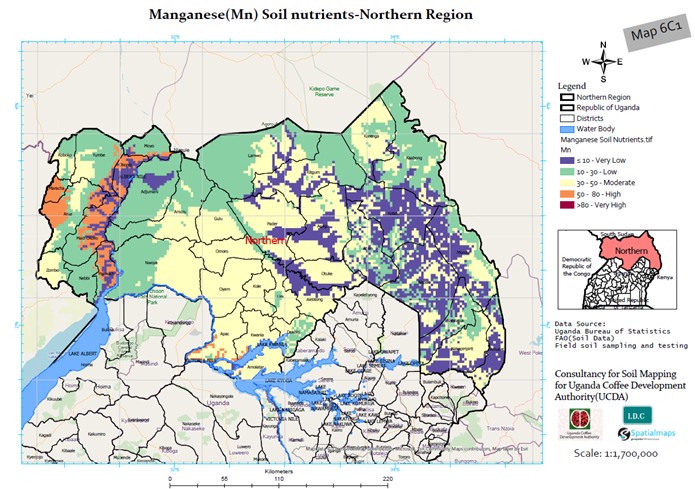
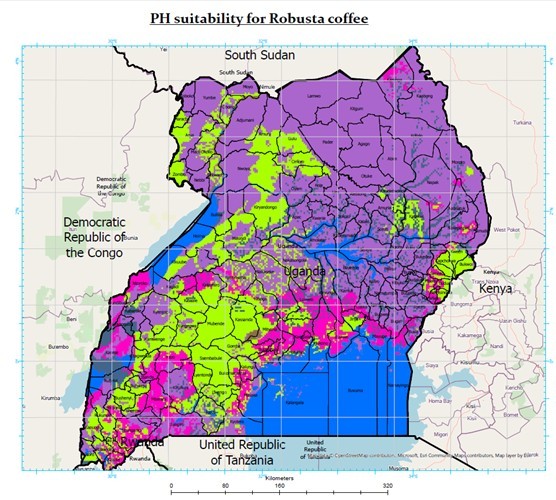
Core Services
We have strong and extensive knowledge, skills and experience in the GIS industry having undertaken several projects across Africa with services including:
- Business analysis and solutions design
- GIS project management and technology adoption consulting
- Spatial modelling and geostatistical analysis
- Locational data Analytics and visualization
- Enterprise GIS application development and systems automation
- Mobile GIS application development
- Geospatial data infrastructure design
- Geospatial data solutions and platforms
GIS mapping services - visualize and manage geographic data with precision.
Our GIS Mapping services to help clients manage and analyze spatial data with precision. Our advanced technologies enable us to create highly integrated database systems, spatial maps ,accurate 2D and 3D spatial analysis models for a number of applications.
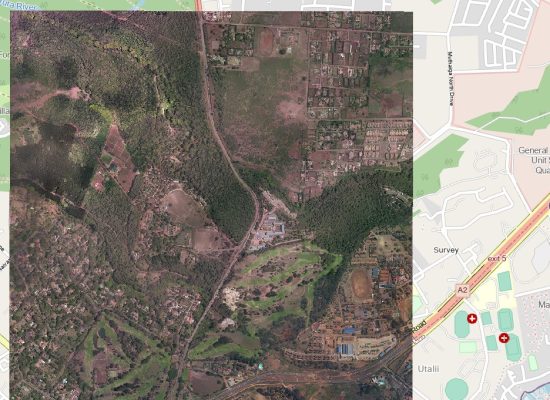
Technology and Innovations integrating AI & GIS Industry
GIS industry is undergoing Geospatial 2.0 transformation, shifting from static mapping to real-time, AI-driven, and immersive intelligence. Key technologies disrupting the industry include artificial intelligence (AI), 3D digital twins, cloud-native workflows, and real-time data integration from IoT and edge devices.
- Geospatial big data from high-resolution aerial/satellite remote sensing, point clouds, IoT data, real-time data can now adopt AI algorithms to automatically identify and classify buildings, roads, vegetation, and power poles from high-resolution satellite imagery or LiDAR in minutes, replacing manual, time-consuming digitization.
- Generative AI allows users to query complex spatial data using natural language, making analysis accessible to non-experts.
- Predictive Analytics integrates AI into analysis of massive historical patterns to predict future events, such as traffic congestion, wildfire risks, or infrastructure failure.
The integration of digital twin technologies with GIS is transforming geospatial analysis, enabling continuous synchronization of spatial 3D models, providing decision-makers dynamic and context-specific insights for informed decisions.
These technologies act as data sources that bridges physical assets with digital analytics for detailed lifecycle insights for data-centric decision making.
Creating a list of potential qualified prospects for your service or product can be daunting when you’re beginning your business. However, this needs to be considered as a follow up on your Target Market Analysis so you can hit the ground running.
By leveraging blockchain technologies, land ownerships can be transparent, supporting accessible and trustworthy land transfers with a reduced risk of fraud and corruption. The technology helps support, immutable records of land, supply chain, and data, ensuring data integrity.
A blockchain based Land Management system is decentralized has the flexibility of the design choices making it adaptable for different land registry systems.
These are multi-dimensional, organized arrays of satellite imagery and geospatial data, often indexing latitude, longitude, and time to enable efficient analysis. It is a way to organize geospatial data so space and time are handled together rather than as separate files.
These technologies revolutionizes Earth Observation (EO) by organizing massive, multi-dimensional raster datasets (space, time, and sensor variables) into Analysis-Ready Data (ARD) structures.
Latest innovations demonstrates its applications in several areas including;
- Real-time ingestion and processing of data, enabling immediate analysis of newly acquired images.
- Integrating both raster and vector data using parallel computing software tools
- Supporting on-the-fly computations and efficient, serverless access to data without the need to download large datasets.
- Implementation of spatial SOLAP
- AI and Machine Learning Integration
Creating a list of potential qualified prospects for your service or product can be daunting when you’re beginning your business. However, this needs to be considered as a follow up on your Target Market Analysis so you can hit the ground running.
IoT devices connects billions of sensors and when integrated with GIS databases and visualisation platforms, the systems support real-time monitoring of traffic, infrastructure, environmental conditions, crop health and relay real-time data for spatially enabled decisions.
Connected Unmanned and Autonomous systems(UAS) demands advanced, near-real-time, high-definition digital maps and locational awareness to support , navigation, Driver-Assistance Systems (ADAS). AI integrates with UAS to enable decisions in this conditions.
Processing of massive data collected by unmanned and autonomous systems continuous is critical for autonomous navigation and emergency responses. Technologies that support data processing at source significantly reduces latency, enabling faster, real-time decisions.
Cloud based locational and GIS centric applications powered with innovations in dynamic vector and raster rendering improves access to geospatial data across endless user platforms, this supports high-performance spatial analysis, improves collaboration and reduces gaps in disaggregated data and GIS systems.
BIM focuses on the detailed design and construction of buildings, while GIS provides spatial analysis and geographic context. The integration transforms infrastructure planning, design, construction and operation across AEC industry.
GIS can complement BIM functions in order to develop a systematic platform for digitization and management of construction lifecycle.
GIS is becoming essential for tracking carbon footprints, monitoring deforestation, and managing environmental, social, and governance (ESG) reporting.
Are you planning on integrating GIS and associated technologies in your current business
how can we help you?
Contact us at the Consulting WP office nearest to you or submit a business inquiry online.
Consulting theme is an invaluable partner. Our teams have collaborated to support the growing field of practitioners using collective impact.
